September 21, 2010

Abuse rampant in California prisons

Mentally disabled prisoners in California are routinely beaten, robbed, sexually assaulted and deprived of food and sanitation. And in a "climate of indifference," prison officials have virtually ignored a 2001 court order mandating that they identify and protect these most vulnerable prisoners.

That was the opinion a federal judge issued last week in refusing to lift the 9-year-old court order. U.S. District Judge Charles Breyer's ruling followed a 6-day trial. The judge cited one instance in which a mentally disabled prisoner lost 35 pounds in five months because his cellmate was stealing his food and guards only laughed at him when he requested their help.

Sacramento Bee series: Prisoner abuse widespread

The judicial ruling echoes a stellar investigative series by reporter Charles Piller of the Sacramento Bee, who obtained and analyzed thousands of pages of documents and interviewed dozens of insiders, including confidential sources. The resulting picture of the inside of California prisons is not pretty:
  • Guards fabricating rule violations that extended the time of prisoners they didn't like, including prisoner activists
  • Prisoners losing "good time" credits for breaking minor rules, such as stepping across a line on the concrete
  • A rigged system in which nearly all prisoners charged with rule violations are found guilty, and appeals or complaints against guards are fruitless
  • Light discipline even when officers severely injure or kill prisoners
In one case, an officer needlessly punched a prisoner in the head, broke his elbows, and then lied about it in reports. The penalty? A 12-day suspension.

"The degree of civilization in a society
can be judged by entering its prisons."

--
Fyodor Dostoyevsky (1860)

Undermining the appeals process, according to prisoners and former officers, is prisoners' fear of retaliation. Edgar Martinez, a former prisoner at High Desert, claimed that guards trampled his belongings and strip-searched him in a snow-covered yard. He said he watched guards provoke fights among inmates and tell others, "this [complaint] needs to go away or we're going to make your life a living hell." Afterward, Martinez said, he was too terrified to protest the mistreatment.

In a 2007 case, guards viciously beat several prisoners and denied them adequate medical treatment, yet not a single one filed a complaint, according to a former lieutenant named Gerald Edwards. Prisoners know that filing a complaint may lead to retaliation, including being shipped off to a different prison dominated by racial or ethnic enemies.

Behavior modification units a living hell

If routine conditions are bad, they are nothing compared to the cruelty, corruption and racism that Piller found when he investigated the so-called behavior modification units.

High Desert State Prison. Photo credit: Ben Kutchins, "Prison Town USA"

These are the units where recalcitrant prisoners, disproportionately African American, are subjected to "extreme isolation and deprivation -- long periods in a cell without education, social contact, TV or radio." A prisoner at the Salinas Valley unit went five months without exercise, sunlight or fresh air, according to his successful lawsuit. At the High Desert facility, prisoners described "hours-long strip-searches in a snow-covered exercise yard. They said correctional officers tried to provoke attacks between inmates, spread human excrement on cell doors and roughed up those who peacefully resisted mistreatment. One said guards contaminated prisoners' food with dirt and insects and starved those who complained.

Many of the prisoners' claims were backed by legal and administrative filings, and signed affidavits, which together depicted an environment of brutality, corruption and fear." As Edward Thomas, a former prisoner in the High Desert unit, described it, it was "like something that happens in a concentration camp."

"Black monkey unit": Abuse based on skin color
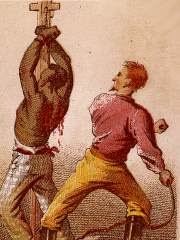
While about a third of California prisoners are black, blacks comprised a majority of prisoners subjected to the High Desert behavior unit. Guards referred to the unit as the "black monkey unit" and joked about how the "monkeys" are "always hanging around in there" -- a macabre reference to suicide attempts by prisoners of color.

"Guards seemed to view behavior modification as a license to make inmates as miserable as possible to compel obedience," Piller reported.

"Several inmates described an incident when staff left one inmate on the floor with rectal bleeding and refused to take him to get medical attention," according to the report of a group of state researchers. When guards arrived, "they said 'It's the f---ing n----- again, let him die.' And they left him there."

Their July 2007 visit to High Desert shook up the state researchers, said one, a sociologist who lectures at UC Davis and has more than 25 years of corrections research experience. Norm Skonovd said he had never seen a similar case. The researchers were allegedly chastised when they reported what they had seen, and were told to tone down and bury the prisoner allegations of abuse. Skonovd claims he suffered professional retaliation.

Correctional abuse: A cause of violence and recidivism?


Prisoners said the behavior modification units were so dreaded that they would act out so they would be placed in "the hole" instead. This, the researchers noted, could lead to more violence behind bars. Indeed, although the units were "sold to lawmakers as a way to reduce recidivism," their brutality would likely lead to more anger and, hence, more convicts returning to prison, the researchers theorized.

For you blog readers who aren’t from California, why should you care?

Because, like Milan is to the fashion industry, so California is a trendsetter for the global prison industry. You all know by now that the USA is the world's premiere Prison Nation, locking up 1 out of 100 residents. But if California were a country, we would rank seventh in the world -- behind the USA, China, Russia, and a handful of others. (That's by raw numbers. If you go by proportion of the population incarcerated, we fall further back; only one out of every 36 adult Californians is under correctional control, compared with a whopping one out of 13 adult Georgians. Hint: Maps showing rates of incarceration for U.S. states look eerily similar when juxtaposed with maps showing states' proportions of African Americans. Click on the links to see for yourself.)

I highly encourage all of you to read the Bee series (available HERE). Muckraking journalism is practically dead these days, with the daily news biz more and more resembling interchangeable strip malls along the highways -- corporate-owned, homogenized, and full of quick-and-dirty crime bytes. And the prison news beat is especially hard to cover, because access is so highly controlled and critical information subjected to censorship (as "Red Hog" reported in Committing Journalism).

I wonder how Dostoyevsky would have rated the civilization level of modern California.

Update: High court won't block Lewis execution

The U.S. Supreme Court has just refused to block the execution of Teresa Lewis, whom I blogged about Sept. 8, setting the stage for Virginia's first execution of a woman in nearly a century. Lewis is scheduled to die by injection Thursday for hiring two men to kill her husband and stepson for a quarter-million dollar insurance payout.

Two of the three women on the high court, Justices Ruth Bader Ginsburg and Sonia Sotomayor, voted to stop the execution. The court did not otherwise comment on its order Tuesday.

Lewis's supporters have argued that she does not deserve to die because she is borderline mentally retarded and was manipulated by a smarter conspirator. It is unfair, they say, that she was sentenced to death while the two triggermen received life sentences, writes Washington Post crime scene blogger Maria Blod.

A CBS video interview with Lewis is HERE. Reaction from Iran is HERE.

September 19, 2010

Science often disbelieved, study finds

How many times have you found yourself in court, being challenged on basic information that is virtually undisputed and noncontroversial among scientists? As it turns out, no matter how knowledgeable you are, or how great your credentials, judges or jurors may disbelieve the scientific evidence you are presenting if it does not match their social values.

That's no big surprise, given decades of social psychology research into cognitive dissonance. But a study funded by the National Science Foundation and scheduled for publication in the Journal of Risk Research sheds new light on why "scientific consensus" fails to persuade.

Study participants were much more likely to see a scientist with elite credentials as an "expert" on such culturally contested issues as global warming, gun control, and the risks of nuclear waste disposal if the expert's position matched the participant's own political leanings.

"These are all matters on which the National Academy of Sciences has issued 'expert consensus' reports," said lead author Dan Kahan, a law professor at Yale University. "Using the reports as a benchmark, no cultural group in our study was more likely than any other to be 'getting it right,' i.e., correctly identifying scientific consensus on these issues. They were all just as likely to report that 'most' scientists favor the position rejected by the National Academy of Sciences expert consensus report if the report reached a conclusion contrary to their own cultural predispositions."

The findings suggest that mere education alone will not increase people's willingness to accept scientific consensus as accurate, said co-author Donald Braman, a law professor at George Washington University. "To make sure people form unbiased perceptions of what scientists are discovering, it is necessary to use communication strategies that reduce the likelihood that citizens of diverse values will find scientific findings threatening to their cultural commitments."

Information sources more atomized

Unfortunately, trends in public consumption of news may make this task increasingly difficult. Although people are spending at least as much time as ever on the news, they are less likely to read the daily newspaper and more likely to get their information from television and online sources including, most recently, their telephones, according to an informative new survey by the Pew Research Center for the People and the Press. This decreases our common knowledge base and makes it easier for ideologically slanted information sources to influence public opinion.

Indeed, the Pew researchers found ideology inextricably linked with people's choices of news sources. For example, here in the United States, Republicans, conservatives, and so-called "Tea Party" enthusiasts were much more likely than the general public to watch Fox News and listen to Rush Limbaugh. In contrast, the researchers found, supporters of gay rights make up large shares of regular readers of the New York Times and listeners at National Public Radio.

In an interesting analysis of the mainstreaming of extremism, alternative journalist Arun Gupta points out the ease with which political pundits for whom facts are irrelevant can indoctrinate the uninformed. A respondent committed to rational scientific inquiry becomes like a dog chasing its tail: In the time it takes to deconstruct one fraudulent news story, the pundits have concocted five more.

Top myths of popular psychology

For a great myth-busting tool, I recommend Scott Lilienfeld's latest, 50 great Myths of Popular Psychology. Lilienfeld and co-authors Steven Jay Lynn, John Ruscio, and the late Barry Beyerstein provide dozens of examples of entrenched popular beliefs that have been debunked by high-quality research, many relevant to forensic practice. A few examples:
  • Human memory works like a tape recorder or video camera, and accurately records the events we have experienced
  • Abstinence is the only effective treatment for problem drinking
  • Criminal profiling helps solve crimes
(You'll remember that last one from my most recent post.)

Given the public's increasingly atomized sources of information, it behooves us to be knowledgeable about both ideological influences and common myths. What an expert witness might naively regard as established science may, after all, be subject to disbelief.

A blogger responds:

"Science, Believing Is Believing," Scott H. Greenfield, Esq. at Simple Justice

The featured research:

September 17, 2010

Forensic psych professor slams video game law

A forensic psychology professor and leading researcher of violence and video games has published an editorial in the Salt Lake City Tribune condemning attempts to restrict violent video games as a "waste of taxpayer money."

Christopher Ferguson, an associate professor at Texas A&M University, wants Utah's Attorney General to sign an amicus brief opposing California's Assembly Bill 1179. An appellate court struck down that law, but California has appealed to the U.S. Supreme Court, which is slated to hear the case this fall. The law would criminalize selling or renting video games deemed "violent" to consumers under age 18.

Ferguson claims it is "simply dishonest" to imply that research consistently links video games with violence:
First, there is no consistent research indicating that video games cause increased violence. Studies of video game effects return weak and mixed results. Many studies are limited by poor methodology, and some scholars do seem eager to promote negative links, oftentimes ignoring inconsistent data from their own results. The most recent Surgeon General’s report downplayed the influence of media violence, as did a recent Secret Service report on school shooters.

My own research, published in peer-reviewed journals in pediatrics, psychology and criminal justice, has found no links between violent video game playing and violent behavior. Other researchers, such as Cheryl Olson, Lawrence Kutner, Dmitri Williams, John Colwell, among others, have come to similar conclusions. Others, such as Patrick Markey, suggest that perhaps video game violence is like peanut butter, a harmless indulgence for the vast majority of children, but perhaps something to be avoided for a tiny minority of children, particularly those already disposed to pathological violent behavior.

Second, as video games have become more popular and more violent in the past two decades, violent crimes among both youth and adults have gone down to their lowest levels since the 1960s. Indeed, if there is a correlation between video game violence and violent crimes, it is in the opposite direction as that suggested by proponents of the California bill. I’m not saying video games have made the United States less violent; we don’t know that. However, the waves of youth violence some anti-game activists have feared simply never materialized….

My understanding is that California is experiencing difficult financial times and has cut valuable services to needy individuals, including many families and children. It is ironic that the state would claim to champion the welfare of children by throwing money at a video game bill that will help no one, yet cut basic health, education and support services to countless children.
Vending Times has additional coverage and background information HERE.

Sept. 21 postscript:

States Join Media Groups in Briefs Opposing California's Violent Video Game Ban, National Law Journal

September 14, 2010

Backlash growing against criminal profiling

UK Guardian: "Psychological profiling 'worse than useless' "

In the beginning, there was Malcolm Gladwell's 2007 masterpiece in the New Yorker, exposing criminal profiling as clever sleight of hand. Three years later, reports in both New Scientist and the Guardian of UK are expressing mounting concerns over the pseudoscientific technique made bigger than life in fictional TV shows.

Leading the backlash is psychology professor Craig Jackson of the Centre for Applied Criminology at Birmingham City University. He will critique the scientific validity of profiling at the British Science Festival this week. Not only is profiling unscientific, say Jackson and a growing chorus of others, but it risks bringing the field of psychology into disrepute. As Ian Sample reports in today's Guardian:
In many cases, offender profiles are so vague as to be meaningless, according to psychologist Craig Jackson. At best, they have little impact on murder investigations; at worst they risk misleading investigators and waste police time, he said.

"Behavioural profiling has never led to the direct apprehension of a serial killer, a murderer, or a spree killer, so it seems to have no real-world value," Jackson said.
Despite profiling's lack of demonstrated validity, police forces around the world bring in behavioral experts in complex or high-profile cases, often to appease victims' families or the media. In the UK, for example, The Home Office keeps a register of experts who are qualified to render offender profiles based on crime information, the Guardian reports.
"It is given too much credibility as a scientific discipline. This is a serious issue that psychologists and behavioural scientists need to address," [Jackson] said. "People believe psychologists like 'Cracker' can exist." In the 1990s television series, police apprehended criminals with help from an overweight, chain-smoking alcoholic psychologist.

Jackson quoted one behavioural scientist as saying he "climbs inside the minds of monsters" and "takes the expression frozen on the face of a murder victim and works backwards."

"They bring themselves forward as if they are shamans who are cursed by nightmares and picturing dead people," Jackson said.
Jackson argues that, since people from marginalized groups are the primary victims of murder, "if we really want to deliver on the objective of reducing the numbers of people who fall victim to violent crime, then we would be just as well concentrating on eradicating homophobia, prejudice against sex workers and the elderly, rather than 'delving' into the heads of serial killers."

In an interview published today in the London Evening-Standard, the vice-chair of the British Psychological Society's forensic psychology division distanced forensic psychologists from criminal profiling. Carol Ireland said forensic psychologists worked in a wide range of areas, including offender risk assessments and interventions, helping victims, and conducting research.

A critical report by Jackson and two colleagues, "Against the Medical-Psychological Tradition of Understanding Serial Killing by Studying the Killers," is slated for publication next month in the legal journal Amicus Curiae, published by the Institute of Advanced Legal Studies at the University of London.

Related news coverage:
Related blog resources:

September 13, 2010

Paradoxical finding on juvenile sex offender risk

Leading tools cannot distinguish among delinquent boys

New tools designed to predict sex offender recidivism risk among juveniles continue to generate controversy and confusion. Some studies find that they work a bit better than the flip of a coin, and some find that they don't. Now, a new study out of Canada adds a paradoxical twist to the mix.

On two leading instruments, generally delinquent juveniles with a prior sex offense scored higher in risk than juveniles who had committed only sex offenses. And, true to this prediction, about 13 percent of these delinquent boys went on to commit another sex offense during the 6.6-year followup period, compared with just 7 percent of the boys with only sex offenses.

But, while they did moderately well at predicting risk among the non-delinquent juveniles, neither tool could reliably predict which among the delinquent, higher-risk youngsters would go on to reoffend sexually. The two instruments were the Juvenile Sex Offender Assessment Protocol-II (J-SOAP-II) and the Estimate of Risk of Adolescent Sexual Offense Recidivism (ERASOR).

A number of factors contribute to the difficulties in accurately predicting risk, especially among juveniles. These include:
  • Adolescent immaturity -- most juvenile offending is time-limited, and will spontaneously cease over time.
  • Low base rates -- it is hard to accurately predict events that have a low likelihood of occurring. In the current study, for example, only 9.4 percent of the youths were charged with another sex offense during the followup period.
  • Situational and random influences -- A lot of offending, especially among juveniles, is due to situational and environmental factors rather than personality variables, and these are extraordinarily hard to predict. (See this PSYBLOG post for a social psychology experiment demonstrating the underappreciated influence of situational variables.)
It all gets back to the larger problem I discussed in last week's report on the British metaanalysis of violence risk prediction tools: Maybe we will never find the Holy Grail. Maybe we've reached the summit of the mountain, and it’s time to step back.

The new study, by Gordana Rajlic and Heather M. Gretton of the Youth Forensic Psychiatric Services in Burnaby, British Columbia, is "An Examination of Two Sexual Recidivism Risk Measures in Adolescent Offenders: The Moderating Effect of Offender Type." It was published in the latest issue of Criminal Justice and Behavior and is available for free from Sage Publications for a limited time.

Related blog resources:

September 8, 2010

Mentally challenged Virginia woman facing death

While all eyes are on Iran's (just suspended) threat to stone a woman to death, a mentally challenged woman in the U.S. state of Virginia faces a more obscure death this month at the hands of her government.

The case of Teresa Lewis is one of dozens of skirmishes in U.S. death penalty states spawned by the Supreme Court's 2002 decision outlawing capital punishment for the mentally retarded. In the years since the Atkins ruling, an estimated 7 percent of condemned prisoners have filed claims on the basis of mental retardation, with about 40 percent succeeding in getting their death sentences overturned.

Central to these battles are opposing experts in forensic psychology. Their role illustrates the fundamental problem with science in court. The law asks a simple, black-and-white question: Is this person's IQ above or below the magic threshold for mental retardation (typically, an IQ score of 70)? Lewis scored 73 and 70 on IQ tests administered since her trial. Such minimal score differences are within the range of random fluctuations and are practically meaningless in a clinical context. But in the legal context, they can be the difference between life and death.

Psychology, in contrast to the law, sees nuances and shades of gray. An IQ score is only one data point, and must be combined with other relevant information to give a meaningful picture of a person's functional capacities. Here, a central issue is Lewis's personality style.

Lewis was sentenced to die under the theory that she masterminded the killing of her husband and stepson for a $350,000 life insurance policy. Although both triggermen received life sentences, Judge Charles Strauss gave Lewis the death penalty, reasoning that she was "clearly the head of this serpent," according to an account in yesterday's Huffington Post.

But new evidence suggests Lewis may have been manipulated into the crime. In a letter written before he killed himself in prison, gunman Matthew Shallenberger said the crime was entirely his idea, and he deliberately manipulated Lewis because he needed money and she "was an easy target."

Three forensic psychology experts have diagnosed Lewis with a dependent personality disorder. She is reportedly so dependent on others that she cannot make even simple decisions such as what to buy at the grocery store. Lewis's chaplain at Fluvanna Correctional Center for Women similarly described Lewis in a Newsweek essay appealing for clemency as "slow and overly eager to please -- an easy mark, in other words, for a con."

The state Supreme Court, a U.S. District Court, and, most recently, a U.S. Court of Appeals, have all upheld the death sentence. The execution, which will be Virginia's first killing of a woman in almost a century, is set for Sept. 23. She gets to choose between the electric chair or lethal injection.

Perhaps she should choose the latter; Kentucky, Oklahoma, and some other states may have to delay executions due to a shortage of one of the drugs in their lethal cocktails.

Related blog post (with additional links to resources):

September 3, 2010

Metaanalysis debunks psychopathy-violence link

No clear winner among violence risk tools

If you are looking for the best tool to assess someone's risk for violence, the array may seem confusing. Lots of acronyms, lots of statistical data about AUC's (Areas Under the Curve) and the like. What do do?

No worries. As it turns out, they're pretty much interchangeable. That is the bottom-line finding of a groundbreaking metaanalytic study in the APA journal Psychological Bulletin by three academic researchers from the United Kingdom.

The University of Nottingham researchers used sophisticated statistical tools to meta-analyze multiple studies on the accuracy of nine leading violence risk assessment tools. All nine turned out to have similarly moderate predictive accuracy, with none clearly leading the pack. And none -- the scholars warned -- were sufficiently accurate for courts to rely upon them as a primary basis for decision-making in forensic cases requiring "a high level of predictive accuracy, such as preventive detention."

Widely touted PCL-R's "Factor 1" a bust

In a result with potentially momentous implications for forensic practitioners, the researchers found that Factor 1 of the Psychopathy Checklist-Revised (PCL-R) does not predict violence. As you know, Factor 1 purports to measure the core constellation of a psychopathic personality (superficial charm, manipulativeness, lack of empathy, etc.). When introduced in court, evidence of psychopathy has an enormously prejudicial impact on criminal offenders.

But, the PCL-R's much-ballyhooed ability to predict certain types of violence owes only to the instrument's second factor, according to the metaanalysis by researchers Min Yang, Steve Wong, and Jeremy Coid. And that's no surprise. After all, Factor 2 measures the criminogenic factors (criminality, irresponsibility, impulsivity, history of delinquency, etc.) that even a fifth-grader knows are bad signs for a future of law-abiding citizenship.

In my experience, the Factor 1 items -- the ones purporting to measure an underlying personality profile -- are the ones more likely to be inflated by some evaluators. That's because many of these items are pretty subjective. Glib? Superficially charming? If you don't like a guy -- and/or he doesn't like you -- you are more likely to rate these negative items as present. That's one of my hypotheses for the large evaluator differences and partisan allegiance effects found with the PCL-R in forensic practice.

Cumulatively, the emerging PCL-R findings beg the question:

Why introduce the Psychopathy Checklist in court if other violence risk tools work just as well, without the implicitly prejudicial effect of labeling someone as a "psychopath"?

Psychopathy evidence skyrocketing in juvenile cases

Despite (or perhaps because of, in some cases) its prejudicial impact, the construct of psychopathy is increasingly being introduced in court cases involving juveniles. It is often used to infer that a youth should get a longer sentence because he or she is dangerous and not amenable to treatment.

Skyrocketing use of psychopathy evidence in juvenile cases
Source: Viljoen et al, Psychology, Public Policy, and Law (2010)


The first systematic review, published in the current issue of Psychology, Public Policy, and Law, found the use of psychopathy evidence against juveniles skyrocketing in both Canada and the United States. Psychopathy evidence is typically introduced when juveniles are being sentenced as adults and in sex offender commitment cases. It is also introduced in a variety of other cases, including ones involving disputed confessions, competency to stand trial, and criminal responsibility, report authors Jodi Viljoen, Emily MacDougall, Nathalie Gagnon, and Kevin Douglas.

In one egregious case showing how judges may improperly use evidence of psychopathy, a Canadian judge reasoned that a youth's "psychopathic device [sic] score" showed that under his "shy and unassuming" exterior lurked "a monster" that "at any time ... may well come alive." As a result, the judge sentenced this minor to an adult penitentiary.

Such inferences of unremitting danger and untreatability are improper. A large proportion of youths measured high in psychopathy score lower on psychopathy instruments once they mature. And so-called psychopathic youths are far from untreatable; in one recent study by Michael Caldwell and colleagues, after intensive treatment youths who scored high in psychopathy were actually less likely to recidivate than a comparison group in a juvenile jail.

"[T]he introduction of psychopathy evidence into juvenile forensic contexts has been somewhat rushed and premature at times," the authors conclude.

Have risk prediction tools hit the ceiling?

Researchers have been toiling for almost five decades to perfect risk prediction tools. Unfortunately, they keep running into an insurmountable obstacle: A large proportion of violence is situational. It's affected by environmental context, not just qualities internal to the individual. And not only that, but it is always extremely hard to predict a rare event.

Based on their metaanalytic findings, the UK researchers say maybe it's time to stop searching for the holy grail. Maybe we've reached the ceiling of predictive efficacy.
Violent behavior is the result of the individual interacting with the immediate environment. Although it may be possible to improve on our understanding and predicting what an individual may do in hypothetical situations, it will be much more difficult to predict the situation that an individual actually encounters in the open community. Even predicting violence within an institutional environment is difficult, where the assessor has much more information about that environment.
Instead, they say, it is time to turn our attentions to interventions that can reduce risk:
Building a better model of violence prediction should not be the sole aim of risk prediction research, which is just one link in the risk assessment-prediction-management triad that aims to achieve violence reduction and improved mental health…The risk, need and responsivity principles derived from the theory of the psychology of criminal conduct provide a useful theoretical framework for risk reduction intervention. Appropriate risk assessment can identify high-risk individuals in need of more intensive management and intervention…. Using tools with dynamic risk predictors to assess risk can identify appropriate changeable treatment targets linked to violence.
The studies included in the metaanalysis were from six countries: the United Kingdom (11), Canada (9), Sweden (3), the United States (3), Holland (2), and Germany (1). The instruments included the PCL-R, the PCL:SV, the HCR-20, the VRAG, the OGRS, the RM2000V, the LSI/LSI-R, the GSIR, and the VRS, as well as seven instrument ubscales: PCL-R Factor 1 and Factor 2, the 10-item Historical subscale, the five-item Clinical subscale, and the five-item Risk Management subscale of the HCR-20; and the Static and Dynamic scales of the VRS.

Dr. Wong, former Research Director at the Regional Psychiatric Centre in Saskatoon, Saskatchewan, studied psychopathy and high-risk offenders for 25 years and developed the Violent Risk Scale and the Violence Risk Scale-sexual offender version before becoming a special professor at the Institute of Mental Health at the University of Nottingham. Dr. Yang is a professor of medical statistics with the Faculty of Medicine and Health Sciences at the University of Nottingham. And Dr. Coid, Director of the Forensic Psychiatry Research Unit, is principal investigator of the UK Home Office’s Prisoner Cohort Study and also studies the epidemiology of violent and criminal behavior at the population level.

The articles reported on here are: Of related interest:

September 2, 2010

Open access to schizophrenia articles

Due to the widespread attention it is getting, a special issue of Current Directions in Psychological Science on schizophrenia has just been made freely accessible online, the Association for Psychological Science announced. The articles (available HERE) include:
  • Neurodevelopment and Schizophrenia: Broadening the Focus by Elaine Walker, Dan Shapiro, Michelle Esterberg, and Hanan Trotman
  • Prenatal Factors in Schizophrenia by Suzanne King, Annie St-Hilaire, and David Heidkamp
  • Current Research on the Genetic Contributors to Schizophrenia by Michael F. Pogue-Geile, and Jessica L.Yokley
  • Schizophrenia Course, Long-Term Outcome, Recovery, and Prognosis by Thomas H. Jobe and Martin Harrow
  • Structural and Functional Brain Abnormalities in Schizophrenia by Katherine H. Karlsgodt, Daqiang Sun, and Tyrone D. Cannon
  • Ventral Hippocampus, Interneurons, and Schizophrenia: A New Understanding of the Pathophysiology of Schizophrenia and Its Implications for Treatment and Prevention by Anthony A. Grace
  • Social Factors in Schizophrenia by Jill M. Hooley
  • Social Cognition in Schizophrenia by Michael F. Green and William P. Horan
  • Cognitive Functioning and Disability in Schizophrenia by Philip D. Harvey
  • Emotion in Schizophrenia: Where Feeling Meets Thinking by Ann M. Kring and Janelle M. Caponigro
  • Psychosocial Treatments for Schizophrenia by Jean Addington, Danijela Piskulic, and Catherine Marshall
  • New Opportunities in the Treatment of Cognitive Impairments Associated with Schizophrenia by Mark A. Geyer
Get 'em while they're fresh!

Hat tip: Ken Pope

September 1, 2010

Forensic psychology at the crossroads

Leading forensic psychologist calls for reform

Alas, summer is over. For my fall forensic overview course, I just read Kirk Heilbrun's new article in Psychology, Public Policy, and Law on the future of forensic psychology. He frames it in the context of the National Science Foundation's scathing report on problems with scientific accuracy and bias in other forensic science disciplines.

Psychology's progress in the forensic arena is at least as good as those of the hard sciences such as chemistry and biology, say Heilbrun and co-author Stephanie Brooks, also of Drexel University. The field has come a long way in the last three decades: Texts and journals galore, about three dozen forensically oriented doctoral programs, many doctoral internship sites with a significant forensic component, various sets of practice guidelines, and even a "best practices" series by Oxford University Press.

But we could do better, says Heilbrun, a pillar of the forensic psychology community.

The limited research on field practices finds three levels of competence:
  • Best practice: Forensic psychologists practicing at the aspirational level expected from highly trained and experienced specialists
  • Appropriate practice: Forensic psychologists who practice in a manner consistent with relevant standards and guidelines set by the field
  • Poor practice: Forensic psychologists whose work is so deficient that it is inaccurate, irrelevant, and/or not helpful to the courts.
Unfortunately, as many of us can attest, there is plenty of this poor-quality work, which can not only harm the individuals in the legal system but also damage our field's reputation. Common problems found with poor forensic reports include extreme brevity, an inadequate data base, use of outdated or irrelevant tests, substantial errors in test scoring or interpretation, and failure to grasp the relevant legal constructs.

Recommendations for improvement


In making recommendations to improve forensic psychology practice, Heilbrun and Brooks focus on the areas identified by the National Science Foundation study (which did not include the fields of psychiatry or psychology). These include both the quality of the underlying science and the elements of bias and human error. They recommend exploring the possibility of adding forensic psychology within the proposed National Institute of Forensic Science as one method of improving quality control. Other recommendations:
  • Develop quantifiable measures of reliability and accuracy of forensic analyses.
  • Competitively fund peer-reviewed research on the scientific bases of validity of forensic methods.
  • Develop quality improvement procedures to ensure best practice and minimize error.
Striking lack of diversity

Finally, Heilbrun and Brooks make a strong plea for greater attention to our field's lack of ethnic and cultural diversity, lest forensic psychology become irrelevant by the mid-21st century:
One of the striking gaps in forensic psychology is between those who provide services and those who are assessed and treated, and about whom legal decisions are made, in consideration of these services. It is crucial that this gap be narrowed. The racial and ethnic composition of the United States is changing; by 2040, it is estimated that Latina/Latino citizens will be in the majority. The delivery of services, and the research on their effectiveness, by individuals with a high degree of specific cultural competence is likely to be promoted by increasing the number of forensically trained psychologists of African American, Asian American, Latina/Latino, American Indian, Alaska Native, Native Hawaiian, and multiracial backgrounds providing such services.

Addressing this goal will require actively encouraging, even recruiting, minority individuals as early as high school. Minority issues within APA are promoted in part through a multigroup council. One potentially effective strategy for the field of forensic psychology would involve closer collaboration with councils like this and with secondary schools and colleges that educate substantial proportions of minority students. The effectiveness of this diversity effort will have a major impact on the extent to which forensic psychology is perceived as providing services that are culturally competent and effective—and the extent to which it actually provides such services.
The article is: Heilbrun, K., & Brooks, S. (2010). Forensic psychology and forensic science: A proposed agenda for the next decade. Psychology, Public Policy, and Law 16, 219-253. Correspondence should go to Dr. Heilbrun.

August 28, 2010

"Islamophobia" prompting rise in hate crimes?

Chinese animation video seen worldwide

You have heard the hoopla over banning a mosque near "Ground Zero" in New York City. And the buzz about the startling level of American ignorance over President Obama's religion (a Pew poll showed about one in five Americans think he is Muslim). Now, a Chinese animated news video links these macro stories with the stabbing of a New York cab driver, making the case for a rise in anti-Muslim violence in the USA. Michael Enright (pictured at right), a film student, allegedly stabbed the cabbie out of anti-Muslim bias. Enright's journals will undoubtedly be used in court as evidence of the biased motivation necessary for a hate crime conviction. Ironically, given his own actions, he allegedly wrote that Muslims were "filthy murderers without a conscience." For a glimpse at international opinion, this 90-second video clip from Next Media Animation in Taiwan is worth checking out:


Related blog post:

Judge may block hater from misusing courts: First Amendment and fair use doctrine at issue (March 8, 2008)

August 26, 2010

Report: Sexual abuse rampant in U.S. prisons

I will never forget "Sean," a young man I treated in prison. When he first arrived after a minor theft conviction, the 19-year-old was assigned a cell with an older convict who saw him as fresh meat. When Sean reported being raped, he was moved to a segregation housing unit for safety. Solitary housing was like torture for this active young man. After months without stimulation, he tried to hang himself. He was punished by being transferred to a harsher prison.

Sean came to mind when I saw the report released today from the Bureau of Justice Statistics (BJS) reporting epidemic levels of sexual abuse of prisoners across the United States. At least 88,500 prison and jail inmates were abused last year, many repeatedly. Several facts in the report, mandatory under the Prison Rape Elimination Act of 2003, are worth highlighting:
  • Guards commit much of the abuse
  • Women prisoners are more at risk from other prisoners, while men are most at risk from guards
  • Gay, transgender, and effeminate prisoners are at heightened risk, as are prisoners with histories of sexual abuse
  • Much of the abuse happens on the first day

The news comes as no surprise to the folks at Just Detention International, an organization dedicated to ending sexual abuse behind bars. They receive dozens of letters a week from prisoners who are being sexually abused.
  • William in Texas wrote that he would misbehave to get locked in the hole just to get away from the guard who was sexually abusing him. He has tried to kill himself, and fears telling his longtime girlfriend.
  • James, a gay prisoner in Michigan, has been raped more than 20 times by numerous prisoners. "Do you know what it's like to see their faces each day? Seeing the look they give me? Knowing that they smile and laugh,” he wrote.
A call for research and action by psychology

Just ahead of the report's release, two psychologists published an article in Psychology, Public Policy, and Law calling for more attention to the problem. "To date, psychology has been largely silent on the issue of prison rape," wrote Tess Neal and Carl Clements of the University of Alabama.

In their article, "Prison Rape and Psychological Sequelae: A Call for Research," Neal and Clements call for research into the "rape subculture" that makes sexual victimization more prevalent in American prisons than elsewhere in the world:
It appears that prison rape in the United States is a much more serious problem than it is in other countries. This fact calls for comparative analysis of systems to look for correlates of victimization rates. What is it about the U.S. prison system that exacerbates the problem of prison rape? Some would argue that inordinately high incarceration rates, and policies that capture more persons with mental disorders is part of the systemic problem. Can these conditions be reversed?
They go on to discuss the "serious and long-lasting" effects of prison rape, "with potentially devastating physiological, social, and psychological components":
Many rapes are violent, bloody, and physically traumatic to victims. Gang rapes are often characterized by extreme abuse and may be particularly traumatic. In addition, the threat and reality of contracting HIV/AIDS has added a new dimension of physical and psychological terror for victims. Loss of social status in the prison facility, labeling, stigmatization, and further victimization are other potential consequences for victims…. The postrape symptoms of prison rape survivors may be even more complex and pervasive than those of other types of sexual assaults based on the fact that many victims are repeatedly assaulted, experience negative social reactions from the prison community, including many staff, and may be perceived as homosexual. The humiliation and perceived loss of one's masculinity, as well as the extensive victim blaming found in prisons could perpetuate the negative psychological effects, possibly increasing the risk of developing PTSD.
The role of expert witnesses

Under the 1994 U.S. Supreme Court case of Farmer v. Brennan, prison administrations are liable when they practice "deliberate indifference" to prison rape. Neal and Clements discuss how expert psychological testimony may be useful in such civil litigation, the authors explain, both to explain the psychological sequelae experienced by prisoners and to discuss the environments that foster prison rape. Further research is also needed into the legal atmosphere surrounding such litigation, they note:
Courtroom dynamics in these atypical cases (e.g., when a male prison rape survivor is a plaintiff filing suit against prison officials) need to be examined. Public biases should be identified so that they can be countered with informative testimony to dispel them. Investigations using the diagnosis of PTSD in these circumstances should be initiated to learn more about how jurors respond to the traumatic aspects of prison rape victimization. As research uncovers more accurate descriptions of the psychological sequelae of such victimization, researchers should examine how jurors respond to these new descriptions in a courtroom setting
The full report by BJS statisticians Allen J. Beck and Paige M Harrison is HERE; selected highlights and a press release are HERE. Correspondence concerning the Psychology, Public Policy, and Law should go to Tess Neal of the University of Alabama.

Related blog posts:

August 25, 2010

Forensic update: Malingering and incompetency

New response style measure hitting the market

Randy Otto and colleagues are as busy as beavers these days. I just blogged about Dr. Otto's new violence risk assessment text; now he and colleagues Jeffrey Musick and Christina Sherrod are releasing the Inventory of Legal Knowledge, a brief measure of response style for defendants undergoing adjudicative competence evaluations.

The 61-item, true-false test is orally administered and takes about 15 minutes. Questions are phrased in simple language and concern the legal process. It's highly portable for in-custody settings. And at $129 for the complete kit it's not a bad deal, considering PAR's normally hefty pricing. (You can order it now, but it won't actually release until mid-September.)

The theoretical basis is the same as for the Test of Memory Malingering and other measures of malingering; one suspects dissimulation when scores are either significantly lower than chance or significantly lower than attained by relevant normative groups.

A validation study has been published online in advance of the print edition of Assessment. The study, by the test authors, is titled: “Convergent validity of a screening measure designed to identify defendants feigning knowledge deficits related to competence to stand trial.” Here is the Abstract:
Because some defendants undergoing evaluation of their competence to stand trial may feign limitations in their ability to understand and participate in the legal process, assessment of their response style is critical. Preliminary research indicates that the Inventory of Legal Knowledge (ILK) has some potential to identify persons feigning competence related impairments. This study examined the convergent validity of the ILK using a sample of criminal defendants who, while undergoing competency evaluations, were administered the ILK and other response style measures. Moderate correlations between the ILK and these other tools provided some support for the ILK as a measure of response style.
More information is HERE.

Online review of updated SIRS malingering test

Richard Rogers' widely utilized Structured Inventory of Reported Symptoms (SIRS) has just been updated with a second edition, and forensic psychologist Steve Rubenzer of Houston, Texas (where "we don't only sing, but we dance just as good as we walk") has a critical review in the Open Access Journal of Forensic Psychology. The abstract:
The Structured Inventory of Reported Symptoms-2 (SIRS-2) contains significant changes designed to prevent false-positive and false-negative classification errors. While the SIRS-2 has many laudatory features, the manual contains some erroneous and questionable statistics and arguments, and authors sometimes stray from the best practices advocated by the first author. The SIRS-2 is a strong choice for assessing feigned psychosis and severe psychopathology. However, evidence for its value in assessing many other conditions, particularly somatic complaints and feigned cognitive impairment, is quite limited.
The full review is online HERE.

Overview: Feigning adjudicative incompetence

And, there's more! Sherif Soliman and Phillip J. Resnick have an overview of accepted methods for detecting feigning in competency evaluations, including specific instruments and their limitations, forthcoming from in an upcoming issue of Behavioral Sciences & the Law that is now online in advance of the print edition. The abstract:
Competence to stand trial (adjudicative competence) is the most requested forensic psychiatric evaluation, with an estimated 60,000 referrals annually. The challenge of detecting feigned incompetence has not been systematically studied until the past decade. Estimates of feigned adjudicative incompetence vary from 8 to 21%. This article reviews techniques for detecting malingered psychosis and malingered cognitive impairment during competence evaluations. Specific techniques for assessing feigned adjudicative incompetence and estimating the malingerer's genuine abilities are discussed. A stepwise approach to suspected feigned adjudicative incompetence is proffered.
Since this manuscript was already in press when the new ILK and the revised SIRS-2 were released, these instruments are not reviewed. In addition to a basic overview of instruments, however, Soliman and Resnick also describe a structured approach. As the authors point out, "Unlike many other evaluations, the assessment of adjudicative competence does not end with the determination that the defendant is malingering." Even with an uncooperative individual, the evaluator must make an effort to determine the subject's genuine capabilities.

Correspondence about that article should go to Dr. Soliman, Senior Clinical Instructor of Psychiatry at Case Western Reserve University in Ohio.

August 23, 2010

Handbook of Violence Risk Assessment

Best practices for violence risk assessment change from second to second. So, publishing a sourcebook on the topic is a bit like trying to capture and hold a hummingbird. Still, the authorship and range of content may make the Handbook of Violence Risk Assessment an authoritative resource for at least a minute or two -- and then they can publish a second edition.

The volume's first editor, Randy Otto, is a respected forensic psychology scholar. An award-winning professor in the Department of Mental Health Law and Policy at the University of South Florida, he is past president of both the American Psychology-Law Society and the American Board of Forensic Psychology. He also chairs the Committee to Revise the Specialty Guidelines for Forensic Psychology (which, by the way, has yet a new draft coming out next month), and he is a co-author of the third edition of the widely consulted text, Psychological Evaluations for the Courts. Co-editor Kevin Douglas is a former colleague of Otto's at the Department of Mental Health Law and Policy.

The book begins with an overview chapter by respected forensic scholar Kirk Heilbrun. Remaining chapters -- most written by leading practitioners and instrument developers -- review specific instruments for assessing both adult and juvenile risk for violence, including sexual violence. Tools reviewed include:
  • EARL-20B and EARL-21G
  • SAVRY
  • Youth Level of Service/Case Management Inventory
  • VRAG, SORAG
  • Violence Risk Scale
  • HCR-20
  • Classification of Violence Risk
  • Level of Service Inventory
  • Spousal Assault Risk Assessment Guide
  • Static-99
  • SVR-20 / RSVP
I am impressed with what I have read so far. John Monahan wrote the chapter on the Classification of Violence Risk. David DeMatteo, John Edens, and Allison Hart have a nice chapter on the utility -- and limitations -- of using psychopathy measures to address violence risk. And Stephen Hart and Douglas Boer provide an up-to-the-minute summary of reliability and validity studies on the SVR-20 and a parallel instrument sex offender risk instrument, the Risk for Sexual Violence Protocol (RSVP), which I predict may overtake the Static-99 at some point, given the latter's instability and atheoretical basis.

My Amazon review is HERE.

August 20, 2010

Blast from the past: "Sex offender myths"

Amidst all the hysteria over sex offending these days, stumbling across this list from 1955 gave me an eerie sense of deja vu. The author, a prominent sociologist, wrote his list of 11 "popular myths about the sex offender" during the zenith of the last sex panic, the Sexual Psychopath Era of the 1930s-1950s. Here are his myths*:

  1. That tens of thousands of homosexual sex offenders stalk the land.
  2. That the victims of sex attack are 'ruined for life.'
  3. That sex offenders are usually recidivists.
  4. That the minor sex offenders, if unchecked, progress to more serious types of crime.
  5. That it is possible to predict the danger of serious crimes by sexual deviance.
  6. That 'sex psychopathy' or sex deviation is a clinical entity.
  7. That these individuals are lustful and oversexed.
  8. That reasonably effective treatment methods to cure deviant sex offenders are known and employed.
  9. That the sex control laws passed recently are getting at the brutal and vicious sex criminal and should be adopted generally to wipe out sex crime.
  10. That civil adjudication of the sexual deviant in indeterminate commitment to a mental hospital is similar to our handling of the insane and therefore human liberties and due process are not involved.
  11. That the sex problem can be solved merely by passing a new law on it.
As a wise poet and philosopher wrote way back when, "Those who cannot remember the past are condemned to repeat it." Kind of depressing that many in the sex offender civil commitment industry seem oblivious to 20th century history, in which an almost identical approach was vigorously pursued, only to be abandoned as an abysmal failure.

*Paul W. Tappan was a prominent sociology professor at New York University, an attorney, and a consultant to the New Jersey Commission on the Habitual Sex Offender. He published widely on criminology and corrections topics during the 1940s-1960s. "Some myths about the sex offender" was published in the June 1955 issue of Federal Probation. Robert Sadoff, a Temple University psychiatrist, republished them in a 1966 article, "Psychiatric views of the Sexual Psychopath statutes."